

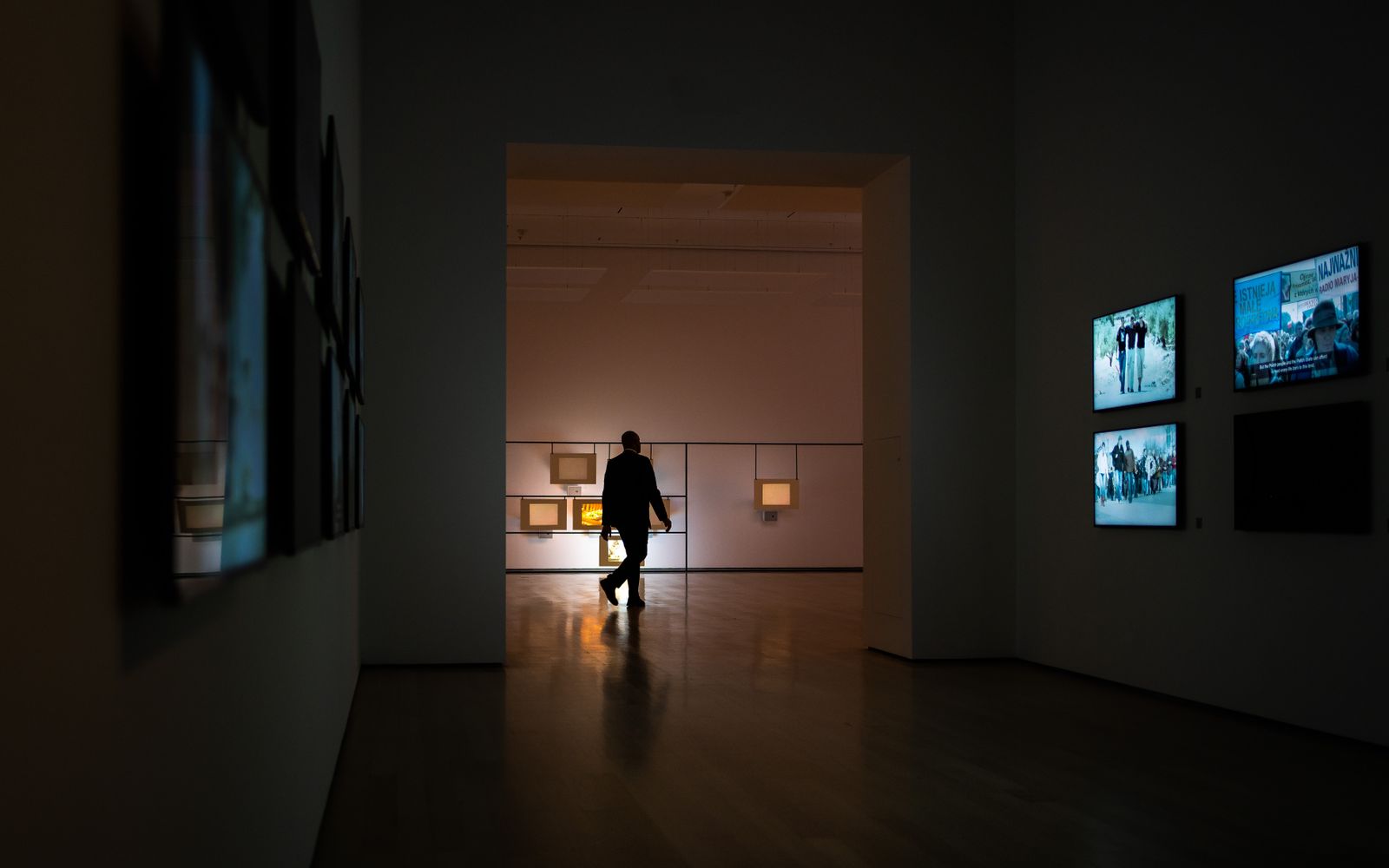
Plan for Saturday 21 November if you want to see both shows in person. Gulf Photo Plus’s What the Sea Leaves Behind brings photographs and reporting about Gulf fishing communities to Warehouse 36. At Warehouse 61, Efie Gallery’s Where the Tide Flows, and the Dunes Gather presents Yaw Owusu’s work with coins, textured surfaces and the material left over from making sculpture. Their published runs overlap from 16 to 22 November, but Gulf Photo Plus normally closes on Sundays. Saturday gives you a more workable plan than the advertised final day.
The connection is what makes the pairing interesting. At Gulf Photo Plus, people earn their living from a changing sea. At Efie, materials acquire or lose value through exchange and transformation. You can follow that question of what gets valued between the two galleries without treating their artists as if they were making the same argument. Gulf Photo Plus exhibition · Efie exhibition
Choose the day before choosing your route
| Visit | Published position | What to plan |
|---|---|---|
| Monday 16 November | Efie’s announced opening date; GPP is already running | Confirm Efie’s first-day public viewing time before relying on its regular hours |
| Tuesday 17–Thursday 19 November | Regular hours overlap 11am–7pm | Start with GPP if you want the documentary photographs first |
| Friday 20 November | Regular hours overlap 11am–7pm; Efie lists a later 9pm close | Finish at Efie if you want to continue after GPP closes |
| Saturday 21 November | Regular hours overlap 11am–8pm; Efie lists a 9pm close | The clearest weekend option for the pair |
| Sunday 22 November | GPP’s advertised final date, but its regular schedule says closed | Confirm a special opening directly; otherwise choose Efie and GPP’s online material |
These windows are the intersection of the galleries’ published regular hours, checked on 9 November 2026. They do not establish a special reception, last-entry policy or guaranteed opening on an exceptional day. GPP lists Monday–Friday 10am–7pm and Saturday 10am–8pm. Efie lists Monday–Thursday 11am–7pm, Friday–Saturday 11am–9pm and Sunday 1pm–9pm. GPP visiting hours · Efie visiting hours
If you have seen a GPP post saying the show ends on 7 November, check its date. Older opening posts retain that earlier end date; the current exhibition page and the gallery’s 8 November update both say 22 November 2026. That later announcement supports the November pairing, while the Sunday opening question still needs a direct answer.
For a Saturday afternoon, make GPP your first stop and leave Efie until second: Efie’s published closing time is later. Give each exhibition enough attention to read its introduction and return to a work that catches you. Neither gallery publishes a required visit length on the pages linked here, so build the afternoon around your own pace rather than a promised timed circuit.
Gulf Photo Plus: read the lives around the photographs
What the Sea Leaves Behind runs 23 September–22 November 2026 at Warehouse 36, also written D36, Alserkal Avenue. Environmental journalist Richa Syal curates the exhibition, bringing her reporting together with photographs by Maureen Daly, Reem Mohammed and Reinilda Dernison. The three projects give you different ways into the relationship between work, inherited knowledge and environmental pressure. Exhibition and artist notes
Daly’s Changing Shores concerns Bahrain, where coastal alteration affects fishing communities. Read the testimony alongside the equipment and shoreline in the photographs: the exhibition places older practices beside newer methods and asks what happens when familiar fishing grounds change. A picture of a working day can become more specific once you know which options remain available to the person pictured.
Mohammed’s The Price of a Shark turns to the UAE’s shark trade. The gallery describes bloodied carcasses and auctions, so this part may be difficult for visitors who are sensitive to images of dead animals. Its subject is also a useful reason to slow down with the captions. The photographs concern both an animal’s ecological importance and its commercial value; a striking image alone cannot explain the trade around it.
Dernison’s Sea Women of Shennah and Masirah follows Bedouin fisherwomen in Oman. The gallery describes knowledge passed between generations, including spearfishing and gathering along the shore, alongside pressure from industrialised fisheries. Look for the work done together and the knowledge involved in deciding where and when to gather. This is a different livelihood from the UAE auctions, even though the exhibition connects both to the Gulf’s changing seas.
One useful approach is to choose a working photograph from two projects, read their accompanying information, and then compare what the people can control. The curator’s account makes resilience a difficult question: adapting to pressure can carry costs for the person, the community or the marine environment. That gives the exhibition more substance than a simple celebration of endurance.
GPP’s official exhibition update looks back at a conversation with Syal and Adele Bea Cipste and confirms the later end date. Its first image shows a seated speaker beside a laptop. It documents a past conversation, rather than announcing a talk you can attend on your visit.
Efie Gallery: compare the sculpture with its residue
Efie’s 16 November 2026–10 January 2027 exhibition is Ghanaian artist Yaw Owusu’s second solo presentation with the gallery, coinciding with its fifth anniversary. At Warehouse 61, the announced mix includes textured canvases, mixed-media sculpture and new works on paper. Efie’s exhibition introduction
The material distinction is the reason to go beyond a quick look at a photograph of the work. Efie describes sculptures assembled from low-denomination coins, with surfaces that can appear almost golden. Their visual richness sits against the small monetary value of each component. Golden-looking does not mean made of gold: the point is how repetition and treatment can alter the way a modest material is perceived.
The paper works introduce another side of that process. According to the gallery, they use remnants and residue from producing the sculptures. Material that could have been discarded becomes the basis of another work, carrying traces of the process that made the more imposing object. Compare a sculpture and a paper work if both are on view when you visit. Start with what you can see in their surfaces, then use the labels to understand how the materials relate.
The title’s tides and dunes suggest movement and gradual accumulation. That does not turn this into another documentary exhibition about the sea. Owusu’s announced focus is how worth is assigned, how small components gather into larger forms, and what remains after something valuable has been produced. It makes a thoughtful second stop after GPP’s more directly reported accounts of livelihoods.
Efie’s official announcement introduces the show and its 16 November opening. The first image is a seated portrait in front of a large circular, patterned work. It is promotional context for Owusu’s practice, rather than a verified view of the forthcoming installation or a promise that every pictured object will be displayed.
If you can only make one stop
Choose GPP for documentary photography and the reported circumstances around it. The captions and three distinct geographical projects are central to the visit. Choose Efie for an encounter with physical materials, especially the relationship between assembled sculpture and the traces used to make the paper works. These are useful differences for a group deciding how to spend a limited afternoon.
After GPP’s published run ends, the pairing can still work partly online. Its exhibition page includes installation photographs and a linked Matterport tour. The tour opened during our check and showed the exhibition’s introductory wall, photographs and blue display partitions. Use it to explore the presentation remotely; it does not replace a close view of each print or establish future physical access. Efie’s longer advertised run gives you until 10 January to plan the in-person half, subject to any holiday changes.
Before a dedicated trip, confirm date-specific access with GPP on +971 4 380 8545 or info@gulfphotoplus.com, and Efie on +971 4 252 4182 or info@efiegallery.com. The checked exhibition and contact pages did not establish admission charges, appointment requirements, photography rules or detailed step-free arrangements. Ask about whichever of those affects your visit, especially if travelling for opening day or the disputed Sunday finale. GPP contact and directions · Efie contact and directions
Comments (0)
No comments yet. Be the first!