

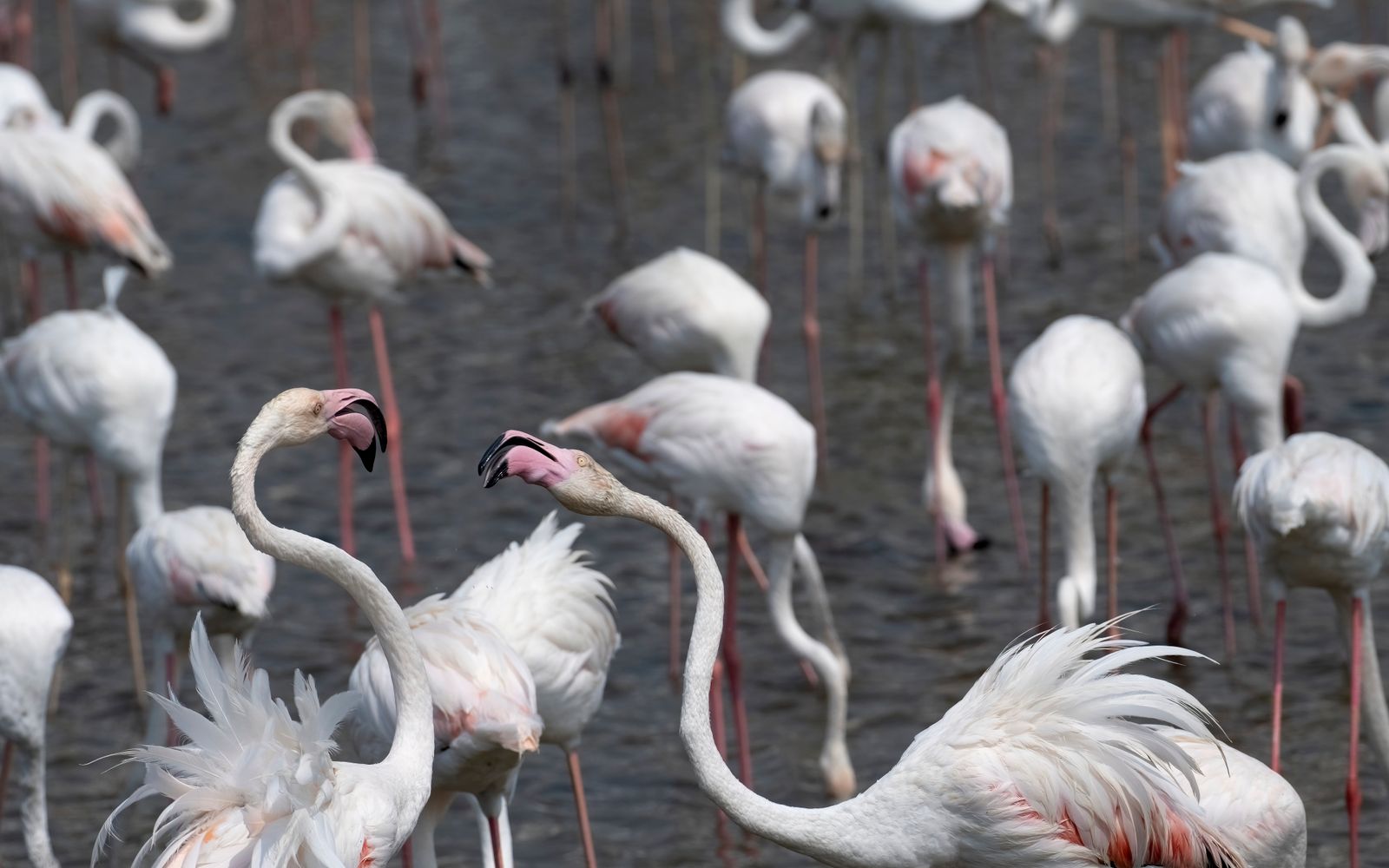
Dubai's birdwatching choices are more varied than a single flamingo photograph suggests. A wetland hide lets you stay still and watch the water. A desert lake gives you a different landscape, with birds moving between open water, shore and vegetation. A guided reserve drive adds someone to explain the habitat, but shares its time with the wider wildlife experience.
Start with Ras Al Khor for a focused visit to an urban wetland hide. Choose Al Qudra for a more open desert-lake outing within the permitted visitor areas. Consider a guided Dubai Desert Conservation Reserve visit when interpretation and arranged transport matter more than spending the whole morning in one viewing position.
The access details below were checked on 4 November 2026. One immediate planning point: Dubai Municipality currently marks Ras Al Khor's Mangrove Hide as temporarily closed. The Flamingo and Lagoon hides are listed separately. Birds move, and a habitat's recorded species list is not a promise of what will be visible during your visit.
Choose the habitat and the access arrangement
| Option | What makes the visit different | Cost and access basis |
|---|---|---|
| Ras Al Khor Wildlife Sanctuary | Observation from managed hides beside an urban wetland | Hides free to use; individuals and families can walk in during opening hours |
| Al Qudra Lakes in Al Marmoom | Public desert-lake areas and a wider mix of water and desert landscape | Free entry described by Visit Dubai; respect the boundaries and signs of the specific visitor area |
| Guided DDCR conservation drive | A guide, reserve drive, lake stop and organized transport | A checked Platinum Heritage morning selection displayed AED2,400 for two adults on 10 November, including the advertised breakfast and private-vehicle arrangement |
The paid morning is a different service from a free hide visit. It buys the specified guided itinerary and transport, not guaranteed sightings or unrestricted access to every part of a reserve.
1. Ras Al Khor for a focused wetland visit
Ras Al Khor's appeal is how much bird habitat sits close to the city. Dubai Municipality describes a wetland made up of mangroves, intertidal areas, mudflats and salt-flat habitat, supporting flamingos, ducks, waders and other birds. Winter brings migratory birds into that mix. Municipality habitat information.
The hides give the visit its shape. You look out from a designated viewing position rather than walking into the wetland to approach birds. That makes Ras Al Khor a useful starting point for someone who wants to practise watching patiently: notice what is feeding, what is resting and what moves into view while you stay in place.
Choose an operating hide
The current Municipality booking page lists the Flamingo Hide, with Makani reference 29772 87328, and the Lagoon Hide, with reference 30487 87923. It describes the latter as looking towards the creek's broad waters, with a range of birds from waders to raptors. Use the authority's location links to select the actual hide you intend to visit. Hide list and locations.
The Mangrove Hide is marked temporarily closed. Do not build a visit around entering it or assume that all three historic hides are operating because an older guide lists them. If one particular viewing point is essential to your plans, check its current status before travelling.
The Flamingo Hide is the natural choice if flamingos are your main interest. The Lagoon Hide is worth considering if you want to spend time looking across a different wetland view. Neither establishes where an individual bird will be standing on the day.
Hours, price and arrival
The Municipality publishes 7:30am–5:30pm from October to March and 6am–6pm from April to September. Those hours belong to Ras Al Khor's visit information; they should not be applied to Al Qudra or another reserve. Current seasonal visit hours.
Visit Dubai describes the hides as free to use, with no advance booking required for individuals and families. Follow the arrival instructions at your chosen hide and bring identification in case requested. Schools, tour operators and other organized groups should confirm arrangements with Dubai Municipality before visiting. Visit Dubai, Municipality registration categories.
Allow for the hide's capacity rather than treating free admission as unlimited space. The published limit is fifteen people at one time, with priority for people of determination. Park only in designated areas and stay within the permitted boundaries.
Keep the hide a quiet place to watch
The Municipality labels the hide a quiet zone, with no phone use, pets, food, drinks or smoking inside. Bring binoculars and a camera if you want to observe or photograph from the permitted viewing position. Plan refreshments around the visit rather than bringing a picnic into the hide.
For families, a little preparation can make the visit more interesting. Give children one thing to look for at a time: a bird feeding in shallow water, a different bill shape, or a change in how a group is standing. Keep that activity quiet and within the hide's rules; this is shared observation space.
For a visual introduction, Visit Dubai's April 2017 flamingo image shows the sanctuary's wetland setting. It is a historical image, rather than a guide to today's bird positions or hide access.
Choose Ras Al Khor when: you want a defined viewing point, a short and focused wetland outing, and a visit that does not require buying a safari package.
2. Al Qudra for birds in a desert-lake landscape
Al Qudra offers a different setting: artificial lakes within the wider Al Marmoom Desert Conservation Reserve, where open water sits among desert habitats. Dubai Municipality describes Al Marmoom's combination of lakes, dunes, woodland and other ecosystems, and says tourists and families can visit its lakes throughout the year. Al Marmoom reserve information.
Choose it for a more open nature outing, with time to look over the water and the permitted lakeside areas. The landscape matters as much as the possibility of a particular sighting. A bird near the shore, another farther out on the lake and movement among the vegetation give you different things to notice without needing to chase a checklist.
Public access does not mean every track is open
Visit Dubai describes free entry to Al Qudra Lakes. The Municipality also identifies public recreation and birdwatching within Al Marmoom, including bird hides in the reserve. That does not make every lake edge, side track or protected sector an open route for visitors. Al Qudra visitor listing.
Use the designated visitor areas, follow current signs and do not cross a fence or closed route to get nearer to birds. If you want to use a particular hide, confirm its location and access before making it the centre of the trip.
Keep the outing simple. Choose an accessible visitor area, settle the journey there and back, and leave time to observe from one place. Do not assume that an unfamiliar sand track is suitable for your vehicle just because it appears to lead closer to the water.
Bring what your own visit needs
Carry water and sun protection for the time outdoors, and plan where you will stop for refreshments and toilets. Do not assume that every lakeside position has facilities immediately beside it. If mobility, shade or a nearby toilet will determine whether the visit works, establish those details for the actual stopping point before setting out.
The cooler part of the day may be more comfortable for an unhurried visit, but select a time that works with the current access arrangements and weather. Year-round public access is not an instruction to arrive at any hour or stay overnight.
Visit Dubai's December 2023 Al Qudra post gives historical visual context for the waterbird setting. Current visitor information and signs govern the visit.
Choose Al Qudra when: you want a desert-lake setting and a flexible nature outing, with your own transport and practical arrangements settled for the area you will actually use.
3. A guided DDCR visit for interpretation and arranged transport
The Dubai Desert Conservation Reserve, or DDCR, is a separate reserve from Al Marmoom. Its birdlife belongs to a desert environment of dunes, plains and vegetation, with both resident and migratory species described by the responsible authorities. Approach a visit through its approved excursions rather than treating the reserve as a public self-drive birding route. DDCR approved visits and operators.
A guide can add something different from a stationary hide: explanations of the landscape, the wildlife using it and the adaptations that allow life in the desert. Choose the actual itinerary carefully, because a general wildlife safari may spend time on mammals, plants, activities or meals as well as birds.
One concrete morning option
Platinum Heritage's Conservation Drive and Breakfast at Al Maha includes a nature drive with a Conservation Guide, a stop at a migratory-bird lake and breakfast at Al Maha Desert Resort and Spa. Dubai pickup is provided in a private, air-conditioned Land Rover Defender. Morning conservation-drive product.
A checked selection for 10 November 2026, two adults, displayed AED2,400 total, with a 7am slot selected. The product identifies a sixty-minute nature safari within an outing of approximately five hours. The published pickup window is 6:30am–7:30am, with the actual collection time confirmed separately, and return is estimated between noon and 12:30pm.
The fee buys that whole product, including transport and breakfast. It is not a price for five hours exclusively devoted to birdwatching, and the lake stop does not guarantee that a particular migrant will be present.
Ask for the birdwatching emphasis you want
If birds are the reason for booking, tell the operator before paying. Establish how much time can be spent observing, what the guide can cover, whether binoculars are supplied and whether your preferred pace or photographic interests can be accommodated. A Conservation Guide is not automatically a promise of a specialist birding guide or a custom species-search itinerary.
The product lists bathrooms at the reserve gate and Al Maha, and dietary needs should be declared at booking. Online reservations require at least thirteen hours' notice. The advertised direct-booking cancellation benefit gives a full refund when cancelling more than eighteen hours before pickup. Those are different cutoffs, so a late booking should not be assumed to come with a fresh cancellation window.
Confirm the current arrangements for any children in the party, along with seating and the breakfast visit. The two-adult example above is not a family quote.
For the operator's wider reserve experience, its Heritage Desert Safari reel shows the vintage-vehicle and cultural-evening product. It is broader operator context, not footage of the Defender morning drive or a guarantee of bird sightings.
Choose a guided DDCR visit when: you value interpretation and arranged transport, understand the wider itinerary, and have confirmed whether it offers the birdwatching focus you want.
Make the season useful without turning it into a promise
Winter migration adds interest to Dubai's wetlands, while resident birds can make a visit worthwhile at other times too. Dubai Municipality describes both residents and migrants within its protected areas. The useful question is which habitat and viewing arrangement you want to spend time in, rather than how many species a destination has recorded over many years.
At a wetland, spend time noticing the birds' different positions and feeding behaviour. At a desert lake, observe the water and vegetation from an allowed viewpoint. On a guided drive, use the guide's explanations to understand the relationship between the habitat and the animals using it.
Binoculars can make a distant bird more rewarding to watch without moving closer. Keep a field guide or notes for reference, while following any site-specific restriction on phones and noise. Give other visitors space at a viewing opening, and leave birds and habitat undisturbed.
Choose one visit and give it time
Ras Al Khor is the clearest starting point for a managed wetland hide. Al Qudra offers a different, more open desert-lake outing. A guided DDCR product adds interpretation and transport, at a price that includes more than birdwatching alone.
Choose the plan whose access and pace work for you. Then let the visit unfold: a familiar bird feeding, a new shape at the water's edge or an explanation from a guide can be more satisfying than rushing between places to complete a list.


Comments (0)
No comments yet. Be the first!