
An abra ride works best when the water belongs in your route. You leave one bank, watch the city from the boat for a little while, then arrive somewhere you actually want to explore. It can be a tiny transport purchase or the main activity of the outing. The useful first decision is which of those you want.
This guide separates the AED 1 traditional crossings, other public Creek connections, a private electric boat booked by time, and the modern network around Al Jaddaf, Festival City and Creek Harbour. They have different stations, fare bases and service windows. Operator details were checked on 5 November 2026; use the current station or RTA timetable for your departure.
Begin with the station pair
| What you need | Service | Published charging basis |
|---|---|---|
| Bur Dubai ↔ Deira Old Souq | Traditional CR1 | AED 1 per passenger, one-way trip; cash |
| Dubai Old Souq ↔ Al Sabkha | Traditional CR2 | AED 1 per passenger, one-way trip; cash |
| Other Old Dubai station pairs | CR3–CR6 | AED 2 listed for each crossing; check the station for the exact journey |
| A private electric Creek outing | TR10 | AED 60 per boat for 30 minutes; AED 120 for 60 minutes |
| Al Jaddaf, Festival City or Creek Harbour | BM2, CR9 or CR11 | AED 2 per person, one-way trip |
“Deira Old Souq” and “Dubai Old Souq” are different station names. Save the full pair you need rather than asking only where to find “the abra”. That small preparation makes the land route much easier to understand.
1. The classic crossing: choose CR1 or CR2 for the bank you want
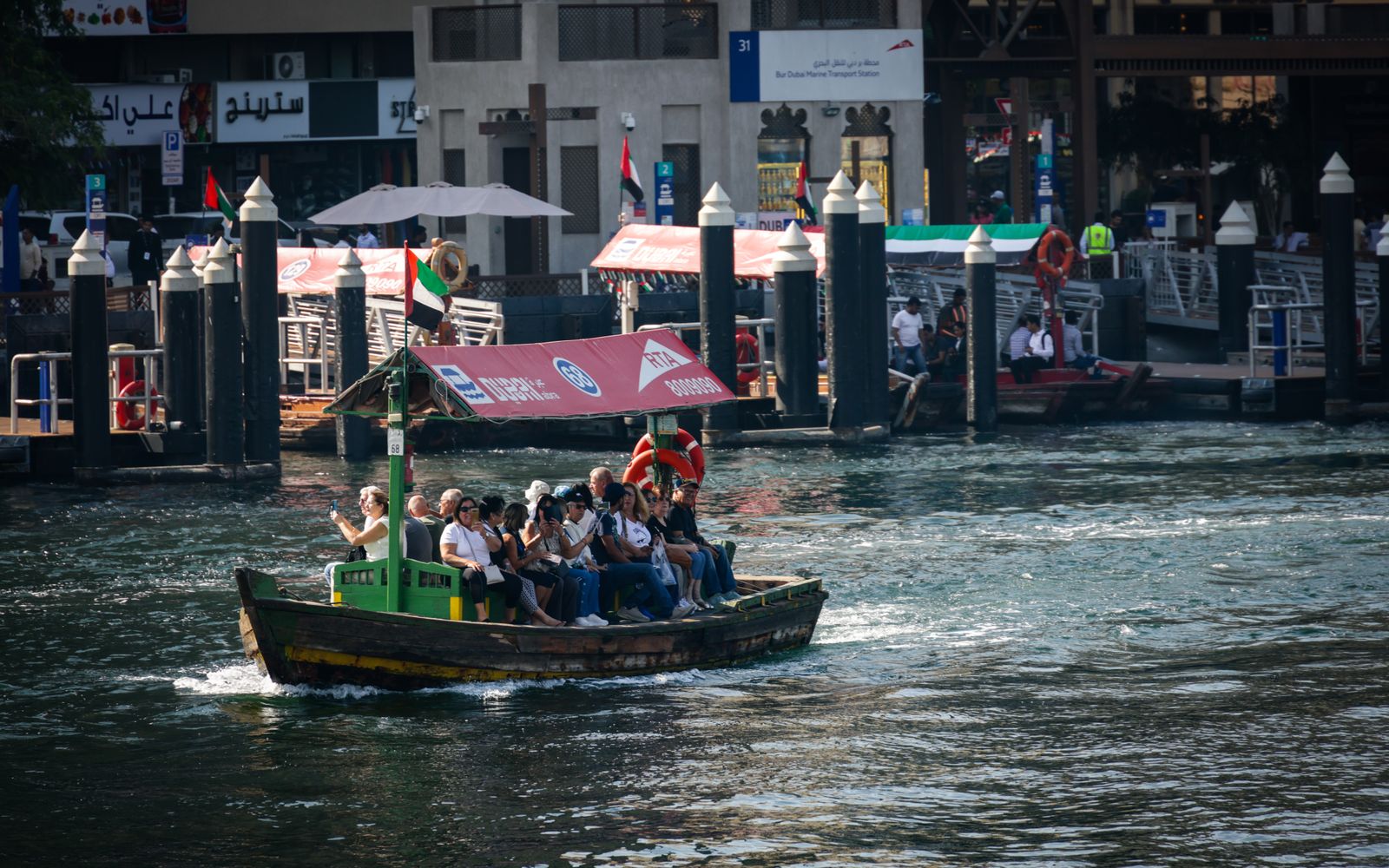
CR1 connects Bur Dubai Abra Station with Deira Old Souq Abra Station, with published service from 6am to midnight. CR2 connects Dubai Old Souq Abra Station with Al Sabkha Abra Station, and is listed as a 24-hour service.
Both cost AED 1 per passenger per trip, cash only. For two adults, that is AED 2 for one crossing, or AED 4 if both cross back on a second one-way trip. The low fare buys the public crossing, not a private cruise, a guided tour or an unlimited day ticket.
Choose the endpoints that fit the walk you want. A published operating window is not a promise of a fixed-minute departure, especially for a late-night connection; check the station when you travel.
2. Make the crossing part of a souq walk
The Bur Dubai side offers a reason to slow down before boarding. At the Textile Souk, fabric rather than a monument provides the colour: silk, cotton, embroidered materials, ready-made clothing and sewing accessories. Visit Dubai places it beside the Creek, with an adjacent abra connection and Al Fahidi nearby.
On the Deira side, the waterfront sits near the Spice, Perfume and Gold souqs. Traditional dhows and the market streets give you a different foreground from the modern skyline. Choose one or two interests—fabrics, spices, jewellery, fragrances or the waterfront itself—rather than planning to inspect every market equally.
The boat makes this a connected outing instead of two separate neighbourhood visits. Start on the bank that is convenient for you, explore it properly, then cross when you are ready for the next part. If you want to browse shops, check the individual places you care about rather than assuming the boat’s service window tells you when every stall opens.
Keep the return decision simple. You might cross back, continue on foot in the second district or use another form of transport. There is no need to force a loop just to end where the day began.
 visitdubai.comFind Traditional Fabrics at Textile Souk in Dubai | Visit DubaiTextile Souk setting and neighbouring abraVisit website
 visitdubai.comDeira Creekside | Old Town Dubai | Visit DubaiDeira’s Creek-side marketsVisit website
3. Other Old Dubai crossings: choose the route by its two stations
RTA lists these connections at AED 2:
| Route | Listed station pair |
|---|---|
| CR3 | Dubai Old Souq ↔ Baniyas |
| CR4 | Al Sabkha ↔ Al Fahidi |
| CR5 | Al Fahidi ↔ Deira Old Souq |
| CR6 | Al Seef ↔ Baniyas |
Cash, nol and cards are listed; confirm the journey’s charge at the station.
CR7, Al Seef–Al Fahidi–Dubai Old Souq, is on hold. Check day-specific times for the route you choose.
4. Al Seef and Al Fahidi: put the walk first
Al Seef offers a different way to begin: a Creek-side destination next to Al Fahidi, with heritage-inspired surroundings, traditional dhows, waterfront dining and shops. Its operator describes a 1.8km destination. Choose the stretch that interests you rather than treating that distance as a walking target.
Al Fahidi’s lanes and wind towers provide another reason to spend time on foot. The cultural district rewards looking at the buildings and spaces between them; it does not need to become a race between named attractions. If you want a specific gallery, museum or meal, check it separately before making it the fixed point of the outing.
Then choose the water leg that serves your next destination. A station name on a map is useful because it gets you somewhere, not because collecting route codes makes a better day. Leave room for the walk to and from the boat, a pause and the possibility that you decide to stay longer on one bank.
 visitdubai.comWalking in Dubai: Cultural Places to Visit | Visit DubaiAl Fahidi heritage walkVisit website
5. Want your own boat? Compare the private electric product
TR10 is AED 60 for 30 minutes or AED 120 for 60 minutes per boat, with up to eight passengers subject to operating area. Those are also the totals for a pair.
The listed circuit is Al Seef–Al Fahidi–Baniyas, daily 4–11pm, last departure 10.15pm. Confirm your departure station and time when booking.
6. Al Jaddaf, Festival City and Creek Harbour are a different network
If your outing is around the newer waterfront districts, check these routes rather than using the Old Dubai station pairs:
- BM2: Al Jaddaf Marine Station ↔ Dubai Festival City.
- CR9: Dubai Festival City ↔ Dubai Creek Harbour, Saturday and Sunday only, 4–11.45pm.
- CR11: Al Jaddaf ↔ Dubai Creek Harbour.
The published fare is AED 2 per person per one-way trip, so two adults pay AED 4 each way. BM2 and CR11 have their own day-specific windows. BM2’s Friday closing time differs between current RTA materials, so check the station or live journey information if a late return matters.
These are useful district connections, not substitutes for the traditional souq-to-souq crossing. Confirm both your outward and return options before making a water journey the only way back.
Which kind of day are you buying?
A walk with one water crossing
Choose the place you want to explore on each side, then connect them. Keep the timetable check proportionate: you need the right service and a realistic return plan, not a minute-by-minute schedule for every shop and café. This is the easiest way to make the boat feel part of the city rather than a separate attraction to tick off.
A waterfront afternoon with an optional boat
Begin with the district you most want to spend time in. If you are enjoying the walk, you can keep the outing there. If the next place appeals and the service fits, add the crossing. That flexibility works especially well when the group wants browsing and a meal rather than a sequence of reserved activities.
A private ride as the main occasion
Book the boat, duration and departure arrangements first. Then keep the plans before and afterwards simple enough that a late meal or a long transfer does not compress the time you meant to enjoy on the water. Privacy is the benefit you are paying for; it does not need an overfilled itinerary around it.
Before you head to the station
Save the exact station pair, route code and return option. Carry the payment method for that service rather than assuming every abra accepts the same one. If a staff member quotes a different product, ask whether it is the public crossing or a private trip before agreeing.
Check close to departure, especially on holidays or when travelling near the end of a service window. A broad opening period and the next actual departure are different things. Keep a land-based alternative if reaching the last boat is essential to the rest of your evening.
Finally, give the land part of the visit enough space. The crossing may be short, but the walk, the markets and the waterfront are what turn it into a day. Choose the ride that connects those interests, then leave yourself time to enjoy where you arrive.
Comments (0)
No comments yet. Be the first!