

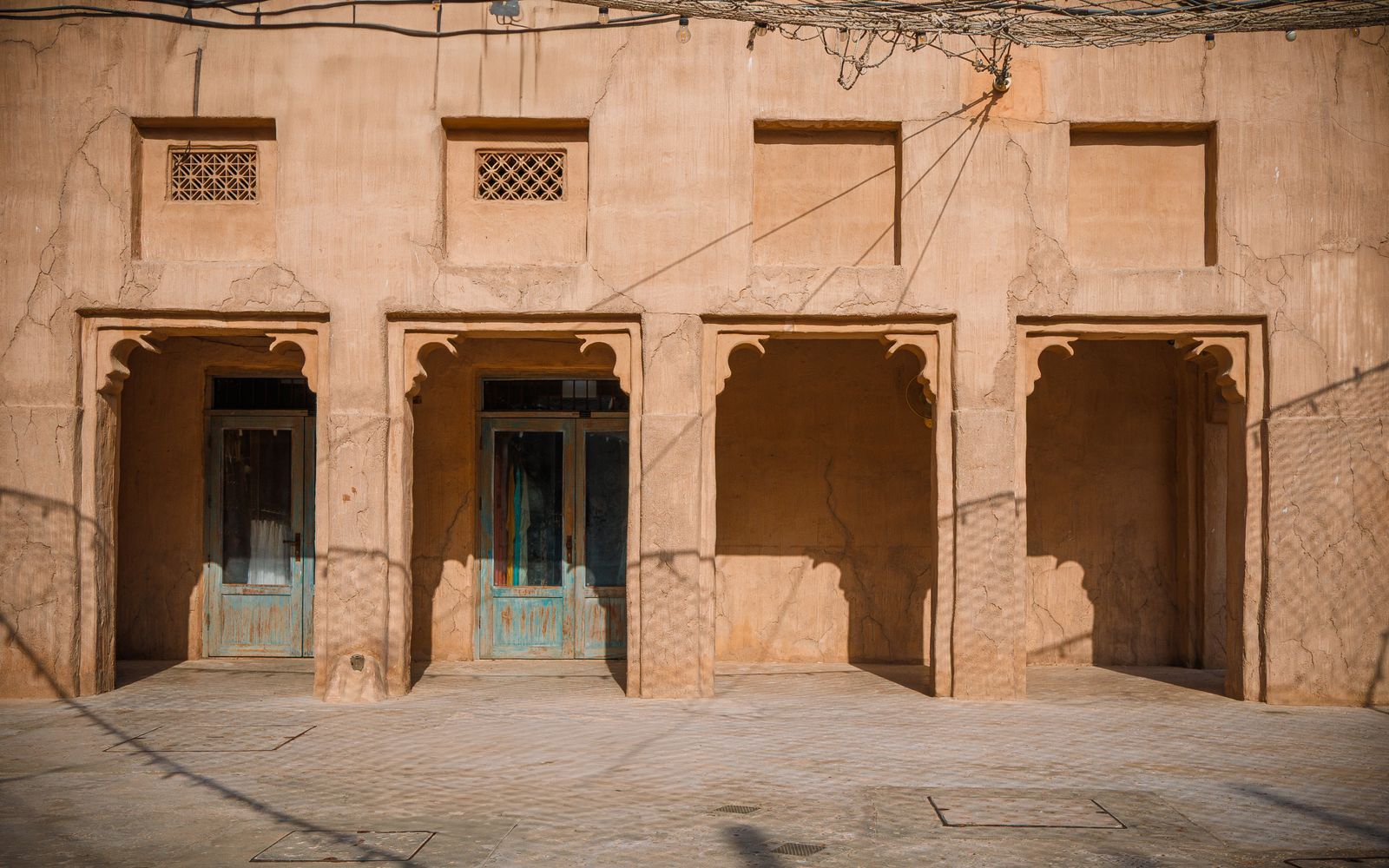
For a first architecture walk, explore the public lanes and choose one interior: SMCCU’s seasonal Open House for a traditional house and cultural conversation, or XVA for a courtyard setting with contemporary art. Choose the hosted Heritage Tour if you want a presenter to connect the buildings with everyday life. The seven details below give each option a purpose beyond collecting photographs.
A wind tower makes an easy photograph. Understanding the house beneath it makes a much more interesting walk. In Al Fahidi, a doorway, a high window and the gap between two buildings can tell you as much as the skyline: how a home met the weather, how its occupants protected their privacy, and how domestic spaces now accommodate cultural programmes and contemporary art.
The district sits beside Dubai Creek in Bur Dubai. Dubai Culture’s architectural presentation describes a way of life from the mid-nineteenth century to the 1970s. That is historical context, not a construction date for every wall you see today. Current programme details were checked on 8 November 2026.
Choose how you want to explore
| Your main interest | A useful approach | The practical distinction |
|---|---|---|
| Rooflines, doors and the shape of the district | A self-guided walk through the public lanes | Individual interiors have their own access; a visible doorway is not an invitation to enter |
| Architecture alongside conversation about Emirati life | SMCCU’s Heritage Tour | Published adult rate AED120; 1.5 hours, at scheduled morning starts |
| A traditional house with a seasonal drop-in programme | SMCCU Open House | November–February, 4pm–8pm; free general entry, no booking required |
| A courtyard setting with contemporary creative life | XVA Gallery and, separately, its café | Gallery hours and café hours differ; café purchases are separate |
For a first visit, the simplest combination is an exterior walk followed by one house. A second interior becomes worthwhile when it changes the experience: a cultural conversation followed by contemporary art, for example. There is little need to turn the afternoon into a race through every doorway.
1 Read the wind tower as part of a room
Start with the barjeel, or wind tower, rising above the roof. Dubai Culture’s Al Fahidi booklet, hosted on the tour-guide training site, describes openings on each side connected to a main room below. Air could pass through the tower into the house to help cool it. Read it as part of the building’s ventilation rather than as an isolated ornament.
That connection is the interesting part. From the lane, look at the tower’s relationship to the building: where it rises, how it meets the roof, and which part of the house lies underneath. You may not be able to see the room, but imagining the vertical connection changes the tower from an isolated ornament into a working component of the home.
2 Look at windows from the street side
After looking up at the towers, bring your attention back to the façade. Dubai Culture links the limited, narrow and high-set front windows with privacy. The opening’s position matters as much as its decoration.
This gives you a useful question for the next stretch of lane: what does the house reveal to the street, and what does it keep within? Notice the position of openings rather than simply counting them. A small window high on a wall creates a different relationship with a passer-by from a large opening at eye level.
Stay with what is visible. You do not need to peer inside to appreciate how a façade establishes a boundary. Nor does one window tell you the full history of the rooms behind it. The rewarding comparison is between a street-facing wall and an interior you are legitimately visiting later: how does the amount of openness change once you cross the threshold?
3 Notice the scale and fittings of the doors
Doorways deserve their own pause. The booklet’s section on old doors associates smaller domestic Al Farkha doors and wooden latches with privacy. It also links door size and decoration with social position. These are useful historical clues, without turning every decorated entrance into a claim about a particular family.
Compare the width and height of a doorway, the panels, the visible fittings and its position within the wall. If a larger door has a smaller opening within it, notice how that changes the scale of entry for one person. Treat this as something to look for, rather than a feature every house must have. Stay on the public side of closed doors.
A present-day gallery sign tells you how a building is used now; it does not date the entrance beneath it. A host or a display may explain whether a particular feature survives from an earlier house or belongs to restoration. Without that information, describe the feature you can see and leave its age open.
For photography, a doorway often makes a stronger subject when you leave room for the surrounding wall. That extra context shows the contrast between the entrance and the largely enclosed façade. Keep entrances clear while you stop, and ask before including staff, guests or other visitors as the subject of your photograph.
4 Use a courtyard visit to understand the house from within
A courtyard changes the view completely. Outside, you read walls and thresholds; inside, you can look at how openings and circulation relate to a shared open space. Choose a house with a public programme or a clearly operating visitor business, then explore only the areas open to you.
SMCCU’s Open House is one route into that experience. At House 26, Al Fahidi, the centre publishes a November–February season, 4pm–8pm, with free general entry and no booking required. The programme introduces a traditional Emirati house through architecture, hospitality and everyday objects. It includes a small pearl-diving and coastal-life museum, traditional clothes to try, Arabic coffee, tea and sweets, and rooftop access for views over the neighbourhood.
The rooftop is especially relevant after looking at towers from below: it offers a chance to relate a house to the surrounding district. Access remains within the centre’s programme. Cultural workshops run on selected days and require advance booking; they are separate from dropping in for general entry. Specialty coffee purchases are also distinct.
See the centre’s Open House details before planning around the seasonal hours. Outside November–February, use another confirmed programme rather than assuming the same evening access continues.
5 Let the lanes become part of the architecture
The spaces between houses matter too. The Al Fahidi booklet calls the narrow alleys Al Sakeek and explains their role in shade and air circulation. Look at the street as part of the neighbourhood’s architecture, with the walls shaping the space between them.
At a junction, pause where you can stand without blocking anyone. Compare the width of the lane with the height of the adjoining walls. Notice where the view closes, where it turns, and where a more open space comes into sight. These are easy observations to share with children: ask them to choose a passage, then explain what made them curious about it.
The practical approach is to walk in short sections and stop properly when you want to look. Checking a map, composing a photograph and navigating a narrow passage all at once makes the architecture harder to enjoy. A shaded lane also remains an outdoor space, so bring water and choose a time that suits the day’s weather.
There is no need for an elaborate fixed circuit. Use your chosen interior as an anchor, explore the nearby public lanes, and return to that known point when you want a break. The architectural details repeat often enough to make comparison more valuable than distance.
6 Separate material history from the colour of a wall
Al Fahidi’s pale surfaces can make the district look visually unified, but its building history involves several materials. The booklet’s materials section lists shell stone, coral stone, saruj and gypsum. Dubai Culture’s presentation also discusses teak, sandalwood and palm fronds. These describe a building tradition; they do not identify the composition of every surface on your route.
Use that history to look more carefully, rather than to label every surface by sight. A pale finish alone does not establish the material behind it or the date of the wall. Where a venue provides an explanation, read it before attaching a name to a detail. Otherwise, a question for a host can be more illuminating than a confident guess.
The useful question for a host is specific: what material or repair are you looking at in this wall, opening or roof? That gives them something to explain. Avoid touching or testing surfaces, and do not infer the condition or structural safety of a building from the appearance of its finish.
7 Look for a new use inside an old house
At XVA, a former house now accommodates several kinds of visitor. The hotel’s own history identifies it as the former home of the Seddiqi family and dates XVA’s inauguration to 2003. That is the opening of XVA’s operation, not the house’s construction date. The setting now combines a hotel, gallery and café.
For an architecture-focused outing, choose the public-facing gallery or café. XVA publishes gallery hours of 10am–6pm daily, while its vegetarian café runs 7am–10pm daily in shaded courtyards. A café purchase is separate from looking at the exhibition, and hotel rooms remain accommodation. Arriving for a 7pm meal does not establish that the gallery will be open.
The interesting question here is how your attention moves between art and building. Give the exhibition its own time, then consider how a courtyard pause changes the pace of the visit. You can enjoy a historic setting while engaging with work made in the present.
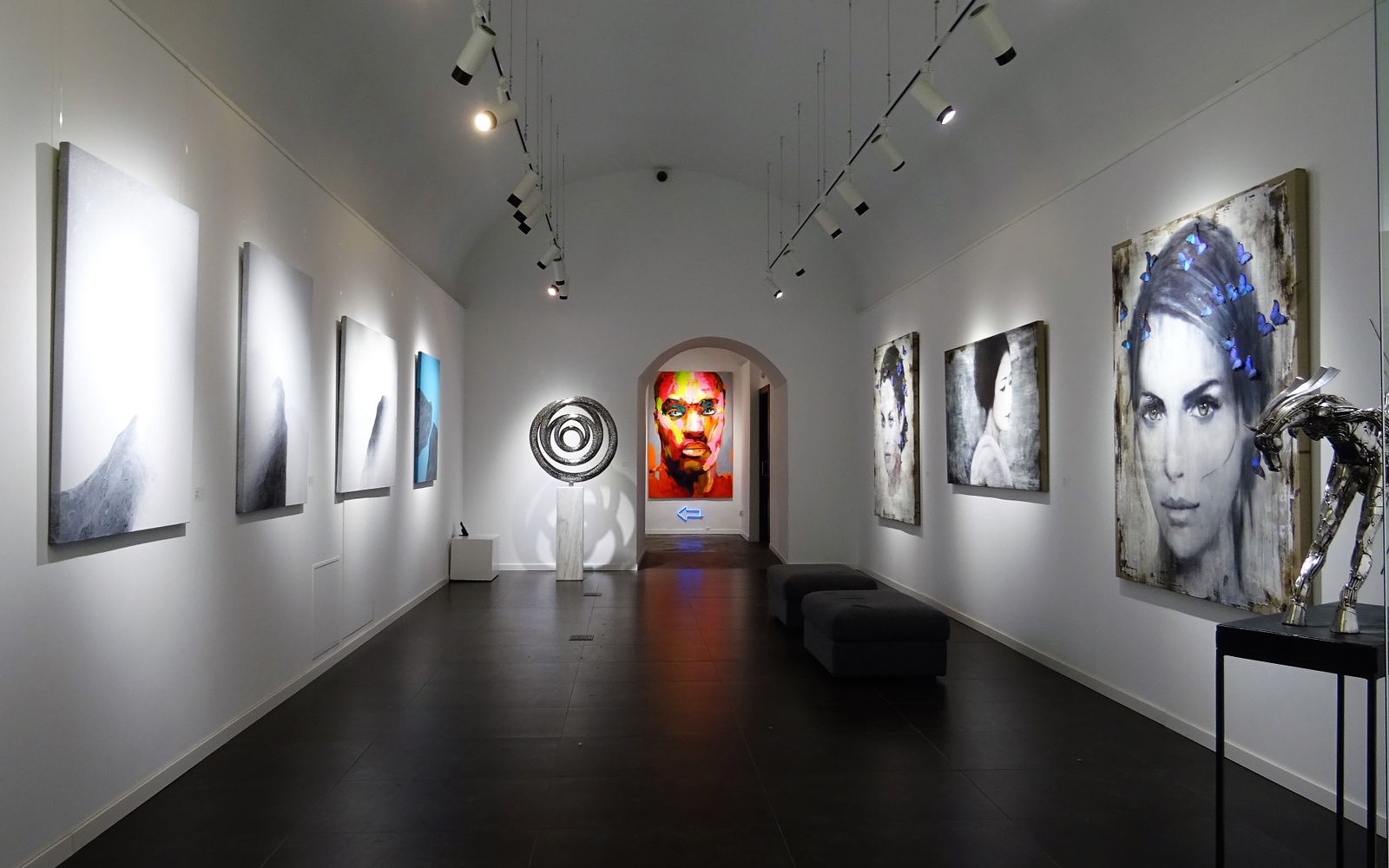
XVA’s October 2026 SYNCHRONICITY post shows visitors talking among works in the gallery. It documents the opening of Charlie Koolhaas’s exhibition, listed 24 October–12 November 2026, rather than a permanent architectural display. The gallery’s programme next lists EIGHT NEONS by Mukesh Shah, 14 November–10 December 2026. Confirm the exhibition for your day, especially 13 November between the published runs. The earlier post does not show the later installation.
When a hosted walk is the better choice
If you prefer someone to connect the district with everyday life, SMCCU’s Heritage Tour is a different choice from the seasonal Open House. It starts in the centre’s traditional wind-tower house with Arabic coffee and dates, includes questions with a cultural presenter, continues through the lanes and concludes at Diwan Mosque.
The published programme lasts 1.5 hours and costs AED120 per adult. Its booking form lists AED60 for children aged 7–12. Starts are Tuesday and Thursday at 10:30am, and Friday to Sunday at 9am. Two adults pay AED240 at those rates; two adults and an eight-year-old total AED300. Ask about younger children rather than assuming free entry. The form still mentions an adult promotion valid only until 31 August 2026; use the regular rate unless the centre confirms a new offer.
This is a cultural heritage experience, so choose it for conversation as well as buildings. If you have a particular interest in construction or conservation, ask how much of that subject the programme covers. SMCCU’s collaboration with Explore with Lulu and Abdalla Alserkal introduces the institution’s conversational approach through presenters and guests in cultural settings; it does not promise the contents of this walk.
For a self-guided visit, begin with the roofline, then spend a stretch of the walk looking only at doors and windows. Add a courtyard or gallery visit, and look again at the houses from outside afterwards. That change of perspective is the point: the tower belongs to a room, the entrance belongs to a household, and the lane connects the whole arrangement.
Choose a morning or late afternoon plan
Morning with a host: book the Heritage Tour first. A 10:30am start and the published 90-minute duration put its nominal finish at noon; a 9am start finishes around 10:30am. Add XVA afterwards if the current exhibition appeals. Those are programme calculations, not a measured transfer time between entrances. On a day without a listed tour, use a self-guided walk rather than turning up for an assumed departure.
Late afternoon in the Open House season: visit XVA’s gallery before its 6pm closing, then use the 4pm–8pm Open House window if both experiences interest you. Alternatively, choose just one house and spend more time in the lanes. Dinner at XVA can follow the gallery, but the café’s later hours do not extend exhibition access. General Open House entry is free; workshops, specialty coffee and a separate café meal have their own arrangements.
Visit Dubai identifies Sharaf DG as a nearby Metro station. Use the exact venue pin for the final approach, especially for a timed tour at House 26 on Al Musallah Street. Walking conditions and interior access vary. If you need a step-free route or want to use the rooftop, ask SMCCU on +971 4 353 6666 about that specific route; its booking form also invites accessibility requests. For XVA gallery access, call +971 4 353 3462. A district visit does not establish that every threshold, gallery room or rooftop suits the same mobility needs.
Leave with a few details you can explain to someone else: how a tower connects with a room, how a high window limits views from the lane, or how a courtyard gathers the spaces around it. Seeing the relationship between those parts makes the district more interesting than a sequence of attractive façades.
Comments (0)
No comments yet. Be the first!