

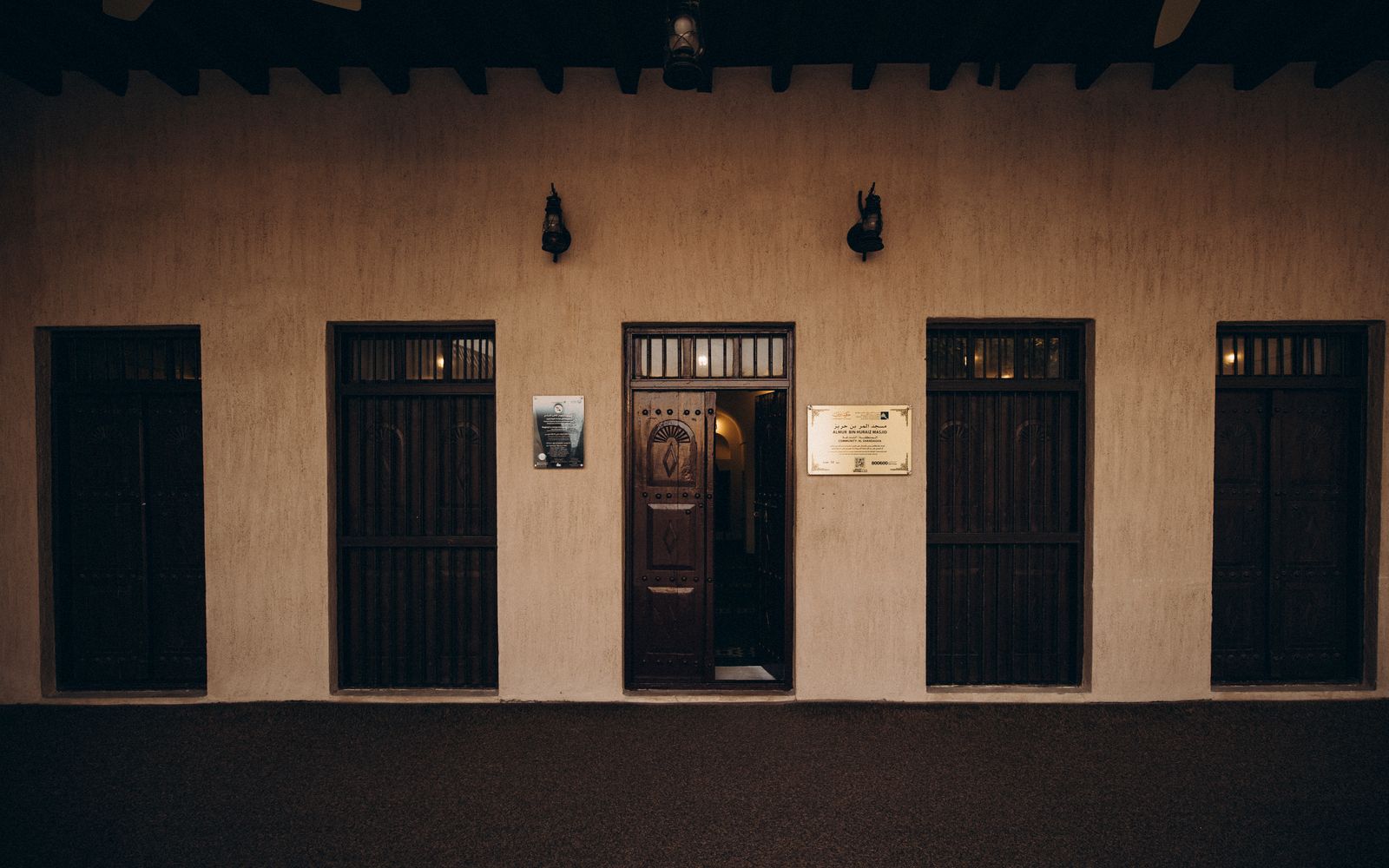
For a first visit to Al Shindagha Museum, begin with Dubai Creek Birth of a City, then choose two subjects you want to explore more closely. Perfume House, Traditional Crafts and Traditional Jewellery make a connected visit about objects and customs. If boats, pearling and working life interest you most, give Culture of the Sea a larger share of your time and plan the walk to that end of the site.
Allow around two to three hours for a selected visit, as a planning suggestion rather than the museum's stated completion time. Al Shindagha is spread through historic houses beside Dubai Creek. A ticket gives you a choice of exhibitions, not an obligation to rush through them all. Begin at the Visitor Centre, check what is operating and turn your interests into a route before setting off.
This guide uses visitor information checked on 8 November 2026. It separates ordinary admission from workshops, tours and individual interactive experiences whose availability needs confirmation for your visit.
Choose a theme before choosing every house
The museum's official visitor brochure and map is useful for understanding the layout. It places the Visitor Centre, Children's Pavilion and Creek introduction together near one end, with crafts, jewellery and perfume farther along, and Culture of the Sea at the other end. Use it for orientation, then ask staff about the route and houses open that day.
| Your interest | Start with | Add if time allows | What the pairing helps you explore |
|---|---|---|---|
| First visit to Dubai's history | Dubai Creek Birth of a City | Perfume House | The waterway's wider story followed by one cultural tradition |
| Boats and work at sea | Culture of the Sea | The Creek introduction | Vessels, livelihoods and the city they supported |
| Making and personal objects | Traditional Crafts | Traditional Jewellery | How things were made, worn and shared |
| Fragrance and customs | Perfume House | Traditional Jewellery | Personal objects and their place in social life |
| A visit with younger children | Children's House | One house chosen for their interests | Games and one manageable subject rather than a long survey |
These are thematic combinations, not a timed circuit or a guarantee that each interactive display is available. The map should help you avoid doubling back. If the sea pavilion is your main reason for coming, tell the Visitor Centre first so the beginning of the visit does not consume the time you wanted to spend there.
Understand the ticket before calculating the day
The published admission schedule sets the standard individual price at AED 50 per person, the group price at AED 40 per person for five or more, and the concession for full-time students aged 5–24 at AED 20. The student category requires student eligibility; it is not a universal under-25 fare.
Exemptions cover children under five, People of Determination accompanied by one escort, senior UAE citizens and holders of valid ICOM membership cards. Confirm the documents accepted for your category. The senior exemption should not be read as applying to every older overseas visitor.
For straightforward examples, two standard tickets cost AED 100, while five adults qualifying for the group category cost AED 200. Two standard adults and two qualifying full-time students cost AED 140. Check mixed-party eligibility before assuming a group reduction can be combined with concessions. These are admission calculations; transport, refreshments, purchases and separately charged activities need their own allowance.
The official ticket channel describes its single ticket as one-day entry to the museum exhibits. Its headline starts at AED 20 because ticket categories differ; that starting figure is not the standard adult price. Choose the appropriate ticket and date, and read the conditions shown before paying. A ticket covering the museum's exhibitions does not establish that every guided programme or workshop is included.
Make the opening hours work for your visit
The museum's published hours are 10am–8pm daily, with the last ticket sale at 7pm. Those hours appear in its visitor brochure and official Instagram profile. If you want several houses, arrive well before the final ticket-sale hour. A 7pm arrival leaves at most an hour before the advertised closing time, including buying a ticket and moving between buildings.
For a morning visit, arrive around opening, choose the main house first and leave a second theme flexible. For an afternoon visit, decide on a finish time before adding more stops. A 3pm arrival with a 6pm finish gives you a three-hour planning window; it does not require you to fill every minute or guarantee a particular tour slot.
The brochure identifies ticket desks at the Visitor Centre, Culture of the Sea Pavilion and Poetry House. Confirm which desk is operating if you intend to arrive at a specific end of the site. The Visitor Centre is the clearest starting point when you need a map, programme advice or help arranging access.
Begin with the Creek for the wider story
Visit Dubai's museum guide describes Dubai Creek Birth of a City as a multimedia introduction, combining video, touch displays, photographs and objects. Its subject connects the growth of the city with family life by the water and the effect of maritime trade on people's livelihoods.
That makes it a useful opening house for visitors who have walked around the Creek but want more context for what they have seen. The waterfront becomes more than a view or a transport connection. It provides a setting for the trades, domestic customs and personal objects explored elsewhere in the museum.
Choose the next house according to the question that catches your attention. If it is how people worked on the water, continue towards Culture of the Sea. If it is how materials and customs travelled, perfume offers a more focused subject. If objects and everyday skills appeal more than a broad historical survey, crafts or jewellery provide a different scale of encounter.
A group does not need to agree on every house. One shared opening exhibition can give everyone a common starting point, after which you can split into smaller groups if appropriate. Agree an actual meeting place and time before separating; a museum distributed through a neighbourhood is less convenient for an informal “see you at the exit”.
Give Perfume House time for the objects as well as the scents
Perfume House explores fragrance through ingredients, making and cultural use. It suits someone interested in perfume, but also someone who wants a single, accessible subject through which to understand customs and memory. The useful question is how scent fits into people's lives, rather than simply which fragrance you prefer.
Dubai Media's official museum opening report explains that the building was formerly the home of Sheikha Sheikha bint Saeed bin Maktoum Al Maktoum and connects the house with her interest in traditional Emirati perfume. The report describes sensory interpretation of ingredients alongside historic incense burners and perfume-related objects. It establishes the exhibition's background, rather than a promise that every item or activity remains unchanged.
The museum's 28 October 2026 Perfume House reel offers a recent visual introduction. Its caption connects perfume making with inherited customs, while the footage includes objects displayed in cases. Use it to judge whether the subject interests you; it does not advertise an included perfume-making class or a take-home bottle.
If a demonstration or making session is the reason you want to visit, ask about the current programme before booking. Learning about a process through displays and joining a hosted workshop involve different arrangements. For an ordinary museum visit, leave time to read the object labels and follow the story beyond the first sensory impression.
Choose Culture of the Sea for boats and livelihoods
Culture of the Sea is the stronger choice when your main interest is how people made a living from the water. The exhibition's designer, Empty, describes a narrative moving from the marine environment through boatbuilding, fishing, pearling and trade to the communities connected with them. Its account of the 2018–2021 project identifies ship models, maps, historic photographs, objects, oral testimony and immersive media among the interpretation.
That combination gives you several ways into the subject. Someone interested in craft can follow the vessels and their construction. Someone interested in social history can pay more attention to people's accounts and the relationship between work and community. The official opening report also identifies traditional wooden boatbuilding by the local term al qalafa.
The visitor brochure highlights a pearl-diving VR experience. Confirm that it is operating, suitable and available when you arrive if it matters to your group. Do not make the whole visit depend on one interactive element, and do not assume a live boatbuilding demonstration accompanies admission simply because the exhibition covers the craft.
The map places this pavilion farther along the museum site from the Visitor Centre and Creek introduction. For a maritime-focused visit, allow time to get there and explore it properly. You may prefer the Creek introduction and Culture of the Sea alone, with a pause between them, to adding three other houses and arriving at your main interest tired or short of time.
Pair crafts with jewellery for making and use
Traditional Crafts is a natural choice if you like looking closely at materials and techniques. The museum brochure describes interactive weaving and embroidery exhibits. Treat those as part of the exhibition's interpretation; a scheduled workshop with a maker, a fixed start time or a particular finished object needs its own confirmation.
The value of pairing this house with Traditional Jewellery is the change from process to use. In the first, you can concentrate on how something is made. In the second, you can ask how an object becomes part of someone's life and acquires significance beyond its material.
The brochure highlights a bridal jewellery set first worn by Fatma Baqer, then lent by her and her family to more than 2,000 brides. That is a specific story to look for, rather than approaching the house only as a display of attractive pieces. Read the interpretation about the people associated with the objects as well as looking at the workmanship.
If you have already chosen Perfume House, jewellery provides another route into personal and social customs. If you prefer making to fragrance, spend more time with crafts instead. A coherent pair is a better use of a limited visit than adding a house simply because it is the next name on the map.
Keep a family visit small enough to enjoy
The brochure describes traditional games at the Children's House, labelled Children's Pavilion on its map. Ask what is available for the ages in your party, then pair that stop with one shared interest. Boats may suit one child; scent, objects or a making display may suit another. The guide does not establish a single age range or a guaranteed drop-in activity schedule.
Set a modest first plan and extend it only if everyone wants more. A family can begin with the children's area and the Creek introduction, then decide whether there is energy for another house. That leaves room to respond to what the children actually enjoy rather than trying to complete an adult's list.
If you want a family trail, storytelling session or workshop, ask the museum for the current dates, language, duration and admission arrangements. Its brochure describes these kinds of programming, but it is not a dated timetable. Build the rest of the visit around a confirmed session and allow time to reach its meeting point.
Plan the arrival and the route between houses
Visit Dubai identifies Al Ghubaiba Metro Station on the Green Line as the nearest Metro stop. The visitor brochure also names Al Ghubaiba Bus Station and Ferry Terminal and notes public parking on Al Khaleej Street. Choose the transport option that fits your starting point, then check the final approach to your intended museum entrance.
The museum's official arrival reel from August 2025 illustrates the Metro, bus, car and ferry options. It is useful orientation, while current transport timetables still need checking separately. A ferry terminal on the map does not mean that a convenient service runs from every place you might be staying.
For access needs, the brochure says the majority of houses have step-free access and describes staff assistance and mobility buggies. That wording does not establish identical access to every house or guarantee a buggy on arrival. Explain which exhibitions you want to see and ask about the route, equipment and assistance available for your visit.
Contact the museum on 800 33222 or alshindagha@dubaiculture.ae for arrangements that need confirming. Ask about the houses that matter to you, any booked programme and suitable rest or toilet stops along the route. These details are more useful than a general assurance that the neighbourhood is accessible.
Arrive with two or three priorities, the correct ticket category and enough time to move between them. Start with the Creek if you want the broad picture; give the sea pavilion priority if maritime history is your reason for coming. The museum's range is an opportunity to choose the story that interests you, with the other houses left for another visit.
Comments (0)
No comments yet. Be the first!