

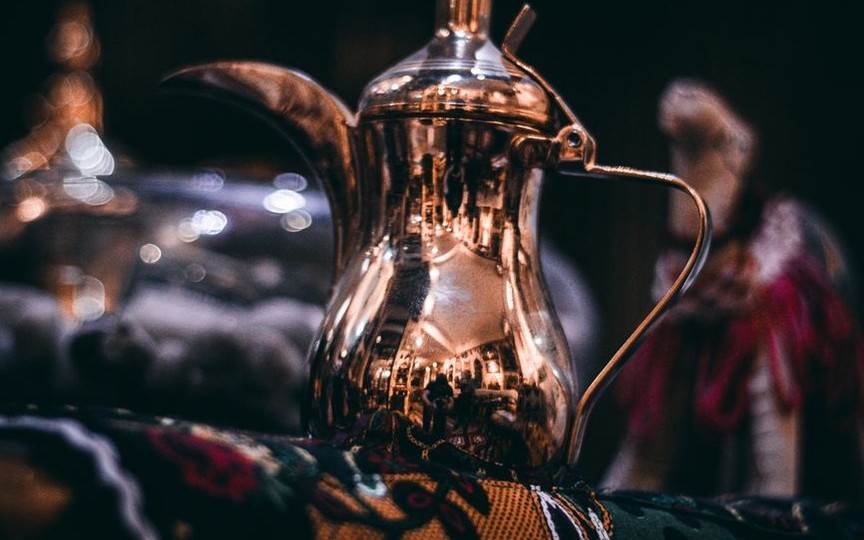
Choose the Coffee Museum if you want to understand the objects used to prepare and serve coffee. Choose the Sheikh Mohammed bin Rashid Al Maktoum Centre for Cultural Understanding, usually called SMCCU, if you want to ask a host about the welcome that accompanies the cup. Both are in Al Fahidi Historical Neighbourhood, but they offer different visits: a collection you can explore at your own pace and a timed cultural programme with a presenter.
For a morning combining both, book the hosted experience first and keep the museum flexible until you have confirmed its opening hours. Neither should be booked on the assumption that it is a hands-on barista class or an unlimited tasting. This guide focuses on the connection between preparation and hospitality, with practical details checked on 8 November 2026.
Choose the question you want answered
| Your main interest | Where to start | What is established | What to confirm |
|---|---|---|---|
| How people roasted, ground and brewed coffee | Coffee Museum, Villa 44 | Antique equipment and regional coffee traditions; an official two-floor museum guide | Current opening, admission, demonstrations and tasting terms |
| Why coffee is offered and how guests respond | SMCCU Heritage Tour, House 26 | A 90-minute hosted programme beginning with Arabic coffee and dates | A place on your date, arrival instructions and any access requirements |
The museum suits someone who likes looking closely at objects and comparing how they work. The tour suits someone who wants a conversation, a set start and a presenter to put a custom in context. If you have time for only one, choose by that difference rather than by how much coffee you expect to drink.
Follow the tools through the Coffee Museum
The Coffee Museum is at Villa 44 in Al Fahidi. Visit Dubai’s museum listing describes old brewing pots and grinders, including examples associated with the First World War. These objects give the collection a wider reach than a display of Emirati serving vessels alone. Look for the label explaining where an object came from before treating it as an example of local practice.
A useful way to explore is to follow the work from bean to cup. First look for equipment used to roast coffee, then the tools that break the beans down, and finally the vessels used to brew and serve it. This is a suggested way of reading the collection, rather than a promise that the galleries follow a fixed route. It gives you a question to carry between the cases: what task did this object make possible?
Compare a hand-cranked grinder with a mortar and pestle. The two require different movements, and the shape of the tool helps you imagine that work. With a pot, look at its handle, lid and spout together. How would someone lift it, keep the lid steady and direct a small pour? The point is to notice the object’s function as well as its decoration. Displays should be observed without handling them unless staff explicitly invite you to do so.
The museum’s own guide places Arabian, Egyptian and Ethiopian coffee areas, antiques and the shop on the ground floor. It shows history, media, literature and a coffee brew bar upstairs, and describes a lounge for coffee and snacks. The guide is useful for orientation, but it is undated: confirm which demonstrations or services are operating when you visit. A brew bar marked on a floor plan does not establish a tasting time or an included drink.
The museum’s October 2026 Instagram reel shows its named entrance and a visiting coffee producer. Use it to recognise the doorway and the venue’s coffee focus. It does not show a complete visitor route or establish the current admission charge.
Read the brewing story without treating it as one universal recipe
UNESCO’s 2015 Arabic coffee decision describes a traditional sequence: beans are lightly roasted in a shallow pan, pounded with a copper mortar and pestle, then brewed in a larger pot before being transferred to a smaller serving pot. The account connects preparation with receiving guests. It is a cultural description, not a recipe issued by the Coffee Museum or a claim that every household prepares coffee identically.
That sequence gives you something specific to look for. A roasting pan belongs to the stage before grinding; a serving pot belongs near the end. When several beautiful metal vessels appear together, the labels and their practical differences matter more than assuming they all did the same job. If a label is unclear, ask whether the object was used for preparation, service or storage.
Keep the international collection in view, too. The museum’s regional areas allow a broader comparison, while this visit’s focus remains Arabic coffee and hospitality. You can learn from a grinder associated with another place without folding it into a single Emirati tradition. With children, try a simple observation task: find one tool that changes the bean and another that helps serve the finished drink. They can follow the process without needing to taste coffee.
Check admission and tasting separately
There is a price discrepancy to resolve before making the museum your main destination. Visit Dubai lists free entry. The independent EMIRARTS cultural directory quotes AED 10 and says a tasting may be included. The museum’s checked website does not establish a current tariff that settles the difference.
Call +971 4 353 8777 or use info@coffeemuseum.ae to confirm the charge and opening for your intended day. If drinking coffee is essential to your visit, ask whether a tasting is available, whether it needs booking and whether it is charged separately. The directory’s tentative wording is not enough to promise an included tasting, and free entry would not by itself mean free drinks.
For a visit involving a wheelchair, pushchair or someone who cannot manage stairs, ask specifically about access to the upstairs rooms and which displays can be reached on the ground floor. The official plan shows two levels but does not establish step-free access. A clear answer before travelling is more useful than a generic accessibility label.
Have coffee with a host at SMCCU
The SMCCU Heritage Tour begins in the centre’s wind-tower house with Arabic coffee and dates, followed by questions with a cultural presenter. The published programme continues through Al Fahidi’s lanes and ends with a visit to Diwan Mosque. Choose it for the opportunity to discuss the custom with someone, alongside the neighbourhood walk.
The published duration is 90 minutes. The checked rate is AED 120 per adult, with AED 60 tickets for children aged 7–12. Starts are 10:30am on Tuesday and Thursday, and 9am from Friday to Sunday. No Monday or Wednesday departure is listed for this particular tour. Use the programme’s dated booking form and confirmation rather than the centre’s general office hours.
Two adults therefore have a tour subtotal of AED 240. Two adults and an eight-year-old have a tour subtotal of AED 300. These examples cover the listed tour tickets only; museum admission, additional food, transport and any extra checkout charges are outside them. An old two-for-one offer remains visible on the form but states an expiry of 31 August 2026, so it has not been used in these November calculations.
The meeting address is House 26, Al Musallah Street, Al Fahidi Historical Neighbourhood. Follow the booking confirmation for arrival and dress guidance, including the mosque element. For younger-child terms, support needs or a date-specific question, the centre lists +971 4 353 6666. Its form also asks what accommodations would make the experience more comfortable; describe the actual help your group needs when booking.
SMCCU’s collaborative introduction from December 2025 presents its approach to cultural understanding and conversation. It provides institutional context, while the current programme page supplies this tour’s schedule and inclusions. The reel should not be read as footage of the exact session you will attend.
Bring a question about the cup
UNESCO’s Arabic coffee heritage entry describes customs including serving elders and guests first, using the right hand to pour and shaking the cup to indicate that the drinker has finished. It also places coffee alongside conversation, poetry and shared memories. These are useful starting points for a discussion with your presenter, rather than a reason to feel that a first visit is an etiquette test.
Ask how a host knows whether a guest wants more, or how a family teaches children the serving routine. Another useful question follows directly from the museum: why separate the brewing vessel from the serving vessel? A presenter can explain the custom in context; looking at the tools beforehand gives you a concrete object to ask about.
You do not need to invent a sophisticated coffee question. A question about an unfamiliar gesture or why the gathering begins with coffee is enough. Listen to the host’s explanation and follow their guidance during the visit. If you prefer not to drink coffee, ask in advance how you can take part in the hosted programme without it; do not assume a particular substitute is included.
Put the stops in a sensible order
For the 9am Heritage Tour, the published 90-minute duration gives a nominal 10:30am finish. Keep the museum as a possible later stop once its hours are confirmed, allowing time to find Villa 44 and take a break. For the 10:30am tour, the equivalent nominal finish is noon. Those are duration calculations, not guaranteed finishing times or measured transfer times.
Putting the tour first is usually the easier plan when museum hours remain uncertain. If you prefer to see the tools before asking your questions, arrange the museum first only after confirming that its opening leaves a comfortable gap before the booked tour. Both addresses are within Al Fahidi, but arriving in the neighbourhood is not the same as finding the correct house.
With a child, decide whether the full 90-minute hosted format and neighbourhood walk suit their attention and energy. The published child rate answers the ticket question for ages 7–12; it does not tell you whether that format will suit your particular child. A self-paced museum visit offers a different kind of flexibility, subject to its current opening and admission terms.
If the museum cannot confirm a visit, keep the booked tour as a complete cultural outing. If no tour fits your day, a confirmed museum visit still gives you a focused way to explore the objects and their uses. You do not need both stops to make the trip worthwhile. Together, they connect the work that prepares the coffee with the welcome that gives the cup its place at the table.
Comments (0)
No comments yet. Be the first!